

Do ice cream sticks change color in sunlight?
As a long - standing ice cream sticks supplier, I've often been intrigued by various questions regarding our products. One question that frequently pops up is whether ice cream sticks change color in sunlight. This seemingly simple query has a multi - faceted answer that combines elements of material science, chemistry, and practical experience.
The Composition of Ice Cream Sticks
Most ice cream sticks are made from wood, such as birch or poplar. These woods are chosen for their strength, smoothness, and relative lightness. Wood is a natural polymer composed mainly of cellulose, hemicellulose, and lignin. Cellulose provides the structural framework, while hemicellulose acts as a binder, and lignin gives the wood its rigidity and resistance to decay.
When exposed to sunlight, the ultraviolet (UV) rays in sunlight play a significant role in any potential color change. UV rays have enough energy to break chemical bonds in the wood's components. Lignin, in particular, is quite sensitive to UV radiation. When lignin absorbs UV light, it undergoes a process called photodegradation. During photodegradation, the lignin molecules break down into smaller fragments, and this can lead to a change in the wood's color.
The Color - Changing Process
Initially, when ice cream sticks are first made, they have a natural, light - colored appearance. However, as they are exposed to sunlight over time, the color change becomes more noticeable. Typically, the wood starts to turn yellowish - brown. This is because the breakdown of lignin releases chromophores, which are groups of atoms that can absorb and reflect light in a way that changes the perceived color of the material.
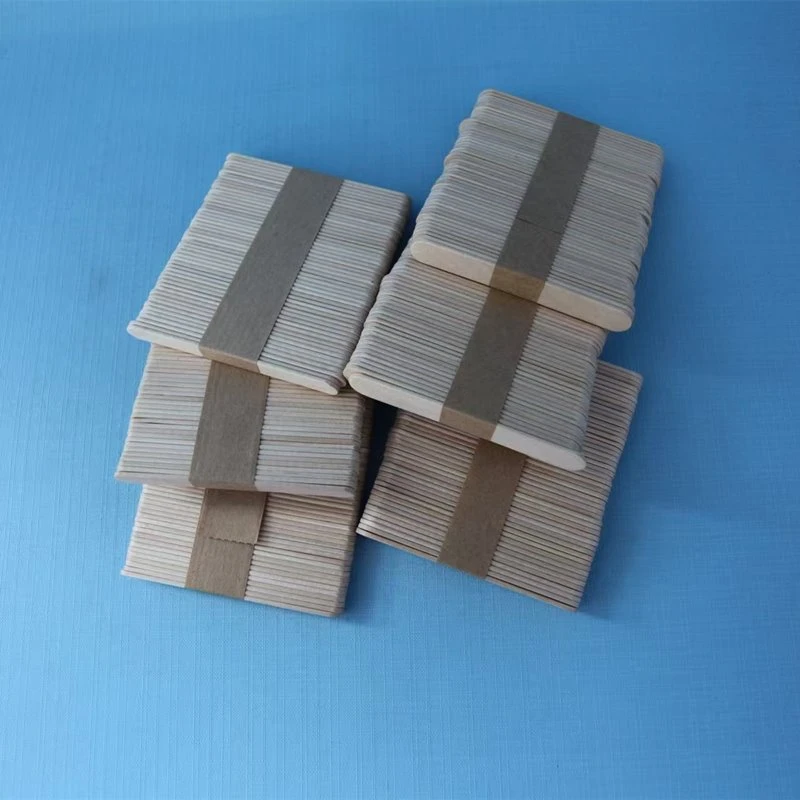

The rate at which the color change occurs depends on several factors. The intensity of sunlight is a crucial factor. Ice cream sticks exposed to direct, intense sunlight for long periods will change color more rapidly than those in shaded or diffused light. The duration of exposure also matters. A stick that sits in the sun for a few hours a day over several weeks will show more color change than one that is only exposed for a few minutes each day.
The type of wood used also affects the color - changing process. Different woods have different lignin contents and compositions. For example, birch wood may change color at a slightly different rate compared to poplar wood. Additionally, the treatment of the wood before it is made into ice cream sticks can influence the color change. Some manufacturers may apply a protective coating to the sticks, which can slow down the photodegradation process.
Implications for Ice Cream Sticks Suppliers
As an ice cream sticks supplier, the potential color change in sunlight has both aesthetic and practical implications. From an aesthetic perspective, customers often prefer ice cream sticks to maintain their original, light - colored appearance. A significant color change can make the product look less appealing, which may impact sales.
On the practical side, the color change can be an indicator of the stick's exposure to environmental factors. If a batch of ice cream sticks has changed color significantly, it may suggest that they have been stored in an area with excessive sunlight. This could also potentially affect the structural integrity of the sticks over time, as the breakdown of lignin can weaken the wood.
Our Product Range and Sunlight Resistance
At our company, we offer a diverse range of ice cream sticks to meet different customer needs. We have 93mm Ice Crem Sticks, which are a popular choice for many ice cream manufacturers due to their standard size. These sticks are made from high - quality wood and are carefully processed to ensure a certain level of resistance to sunlight - induced color change.
We also provide Wooden Popsicle Sticks. These sticks are known for their natural and rustic look. While they may still experience some color change in sunlight, we take steps during the manufacturing process to minimize this effect. For those looking for a more vibrant option, our Colorful Ice Cream Sticks are a great choice. The colors are carefully selected and applied to withstand normal sunlight exposure without fading too quickly.
How to Minimize Color Change
If you are an ice cream manufacturer or a retailer, there are several steps you can take to minimize the color change of ice cream sticks in sunlight. First, proper storage is essential. Store the sticks in a cool, dark place away from direct sunlight. If possible, use opaque containers to protect the sticks from UV rays.
When displaying ice cream products, try to keep the ice cream sticks in shaded areas. If you are using a freezer display case, make sure it is not placed in direct sunlight. Additionally, if you notice that the ice cream sticks are starting to change color, it may be a good idea to rotate your stock regularly to ensure that the products with less color change are sold first.
Conclusion
In conclusion, ice cream sticks do change color in sunlight due to the photodegradation of lignin in the wood. The color change is a natural process that can be influenced by factors such as sunlight intensity, duration of exposure, type of wood, and wood treatment. As an ice cream sticks supplier, we are committed to providing high - quality products that have a reasonable level of resistance to sunlight - induced color change.
If you are in the market for ice cream sticks and have questions about our products, their resistance to sunlight, or any other concerns, we would be more than happy to assist you. We invite you to contact us for further discussions and to explore how our ice cream sticks can meet your specific needs. Whether you are looking for standard - sized sticks, wooden popsicle sticks, or colorful options, we have the right product for you.
References
- Hon, D. N. - S., & Shiraishi, N. (Eds.). (1991). Wood and Cellulosic Chemistry. Marcel Dekker.
- Rowell, R. M. (2005). Handbook of Wood Chemistry and Wood Composites. CRC Press.