

Beauty wax scrapers are professional tools widely used in hair removal, skin care, and cosmetic treatments. They help remove unwanted hair or stimulate skin turnover through physical scraping or as an adjunct to waxing. With the increasing sophistication of the beauty industry, wax scrapers have continuously improved in terms of material, design, and application scenarios, becoming a common tool in beauty salons and home care settings.
Functionally, wax scrapers are primarily used for hair removal in conjunction with hot or cold wax. To use, melted wax is evenly applied to the skin. After cooling, the scraper is used to scrape against the direction of hair growth, removing the wax layer and ultimately removing the hair. This process not only provides longer-lasting hair removal results but also reduces follicle stimulation and slows hair regrowth. Furthermore, some wax scrapers feature special curvatures or double-sided designs to accommodate the curves of different body parts (such as the underarms, legs, and bikini line), enhancing precision.
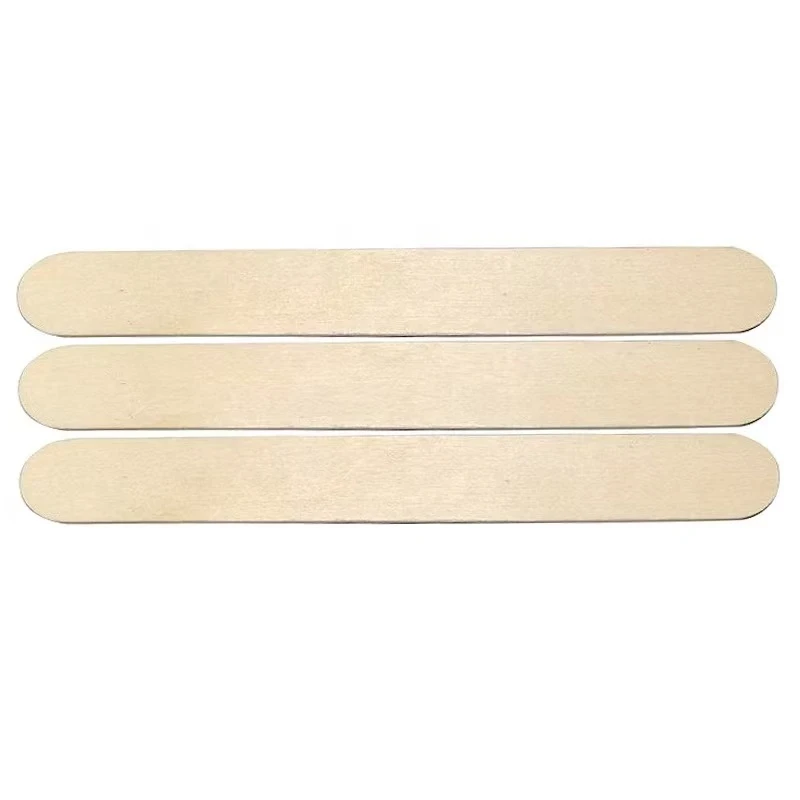
High-quality wax scrapers are typically made of medical-grade stainless steel or high-strength plastic, ensuring hygiene, durability, and resistance to deformation. Stainless steel is easily sterilized at high temperatures, making it suitable for frequent use in professional settings. Plastic scrapers, on the other hand, are lightweight and cost-effective, making them popular in home care kits. Modern technology has also led to designs with non-slip handles or replaceable blades, further enhancing the user experience.
It is important to note that proper use of a wax scraper directly impacts both effectiveness and safety. Before use, cleanse the skin and test the wax temperature to avoid burns. Maintain a steady hand during scraping to prevent residual wax and skin strain. Some people with sensitive skin may need to use soothing skincare products to reduce redness and swelling.
Overall, wax scrapers for beauty applications hold a significant position in the hair removal and skin care market due to their efficiency and cost-effectiveness. With technological advancements, their designs may further integrate ergonomics and antibacterial features, providing more professional solutions for the beauty industry.